
What Is an Idler Sprocket? Working, Types & Uses

Mechanical systems rely on precision. In any machine where motion is transferred from one point to another, every component plays a specific role. While motors provide the power and drive sprockets initiate the movement, there is often a silent hero in the middle of the assembly: the idler sprocket.
Idler sprockets are critical components in chain-driven systems, yet they are frequently misunderstood or overlooked during the design phase. They don’t generate power, nor do they directly drive a load. Instead, they serve as the stabilizers and regulators of the system. Without them, chains would sag, vibrations would damage sensitive parts, and efficiency would plummet.
Whether you are designing a complex conveyor system for a manufacturing plant or simply trying to understand the mechanics behind a piece of agricultural machinery, grasping the function of sprocket idlers is essential. This guide covers everything you need to know about these components, from their basic definition to their specific roles in differentials and chain drives.
Introduction to Idler Sprockets
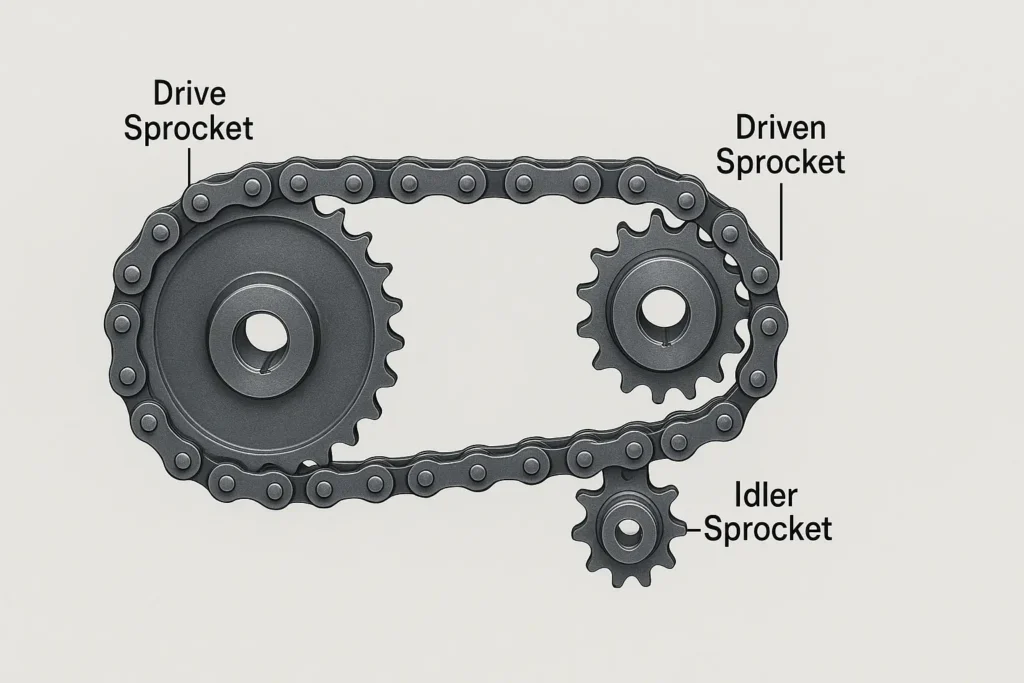
Chain-driven systems are ubiquitous in the industrial world. They power everything from bicycles and motorcycles to massive assembly lines and combine harvesters. A typical setup involves a driver sprocket (connected to a motor or engine), a driven sprocket (connected to the load), and a chain loop connecting the two.
However, physics rarely allows for a perfect, maintenance-free loop. Gravity causes chains to sag on the slack side. Start-stop cycles create shock loads. Misalignment causes wear. This is where the idler sprocket becomes essential.
By strategically placing a chain idler in the system, engineers can control the behavior of the chain. These components ensure that power transmission remains smooth, consistent, and safe. Understanding what idlers are in mechanical contexts is the first step toward optimizing machine performance and extending the lifespan of your equipment.
What Is an Idler Sprocket?
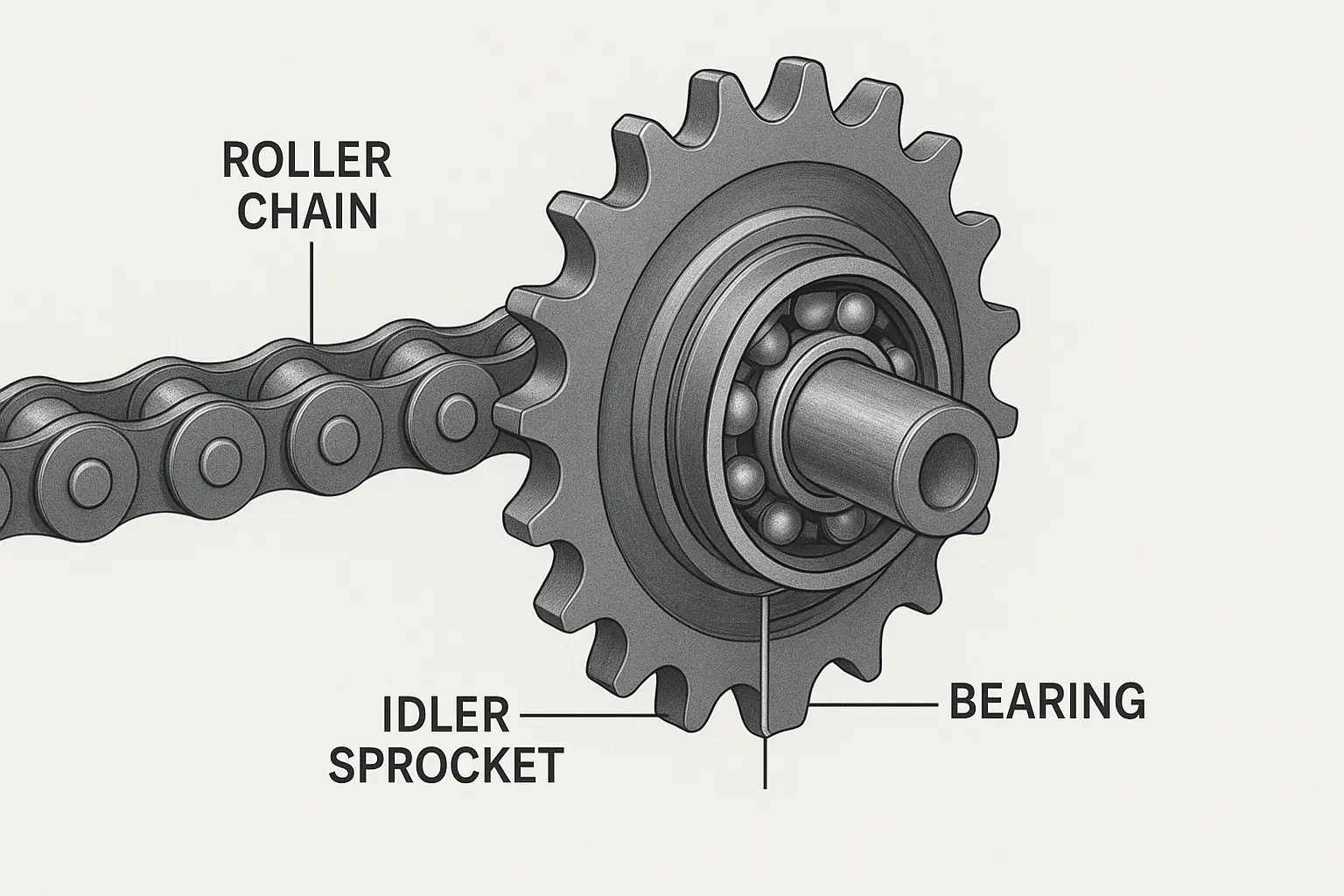
An idler sprocket is a wheel with teeth (sprockets) that engages with a chain but is not connected to a power source or a load-bearing shaft. It is “idling,” meaning it rotates freely on its axis.
To clarify the distinction:
- Drive Sprockets: These are keyed or set-screwed to a shaft that is turned by a motor. They input energy into the system.
- Driven Sprockets: These are attached to the output shaft. They receive energy from the chain to perform work.
- Idler Sprockets: These sit on a shaft or a stud and spin freely. Their only job is to guide, tension, or support the chain.
When asking “what is idlers” in the context of mechanical systems, you are essentially looking at a component designed to manage the path and tension of a flexible drive element. While gears mesh directly with each other, sprockets mesh with chains. An idler sprocket ensures that this engagement happens smoothly, preventing the chain from slipping off the teeth or vibrating excessively during operation.
What Is Idlers in Chain Drive Systems?
In the specific context of a chain drive, the role of idlers goes beyond simple rotation. They act as the primary method for maintaining system integrity.
Maintaining Chain Tension
Over time, all chains elongate due to wear. This is often referred to as “stretch,” though the metal links don’t actually stretch like rubber; rather, the pins and bushings wear down, creating more play between links. As the chain gets longer, it becomes slack. An idler sprocket pushes against the chain—usually on the slack side—to take up this excess length and maintain proper tension.
Supporting Chain Alignment
Long chain spans are prone to swaying side-to-side. If the chain enters the drive sprocket at an angle, it causes rapid wear on the sprocket teeth and the chain side plates. Idlers act as guides, ensuring the chain travels in a straight line between the driver and the driven components.
Reducing Vibration and Wear
A loose chain creates a “whipping” effect. This vibration can be destructive, causing noise and damaging bearings or shafts. By stabilizing the chain path, the idler reduces this harmonic vibration, leading to quieter operation and significantly less wear and tear on the entire drive assembly.
How Does an Idler Sprocket Work?
The mechanics of an idler sprocket are deceptively simple, but their application requires careful engineering.
Basic Working Principle
The idler sprocket is mounted on a bearing or bushing that allows it to rotate with minimal friction. As the chain moves past it, the teeth of the idler engage the rollers of the chain. Because the idler is free-rotating, it offers very little resistance to the system. It simply matches the speed of the chain.
The interaction is purely structural. The idler applies a force perpendicular to the chain’s direction of travel. This force redirects the chain or takes up slack, but it does not add or subtract torque from the system.
Role of a Chain Idler
The chain idler is typically positioned on the “slack” side of the drive—the section of chain returning from the driven sprocket to the driver. This is where tension is naturally lowest. By pushing against the chain here, the idler eliminates the slack that could cause the chain to jump a tooth (skip) on the drive sprocket.
Furthermore, idlers improve “chain wrap.” This refers to the amount of contact the chain has with the drive sprocket. By pushing the chain inward, the idler forces the chain to engage with more teeth on the driver. More engaged teeth mean better load distribution and less chance of slippage under heavy loads.
How Would an Idler Sprocket Work on a Differential?
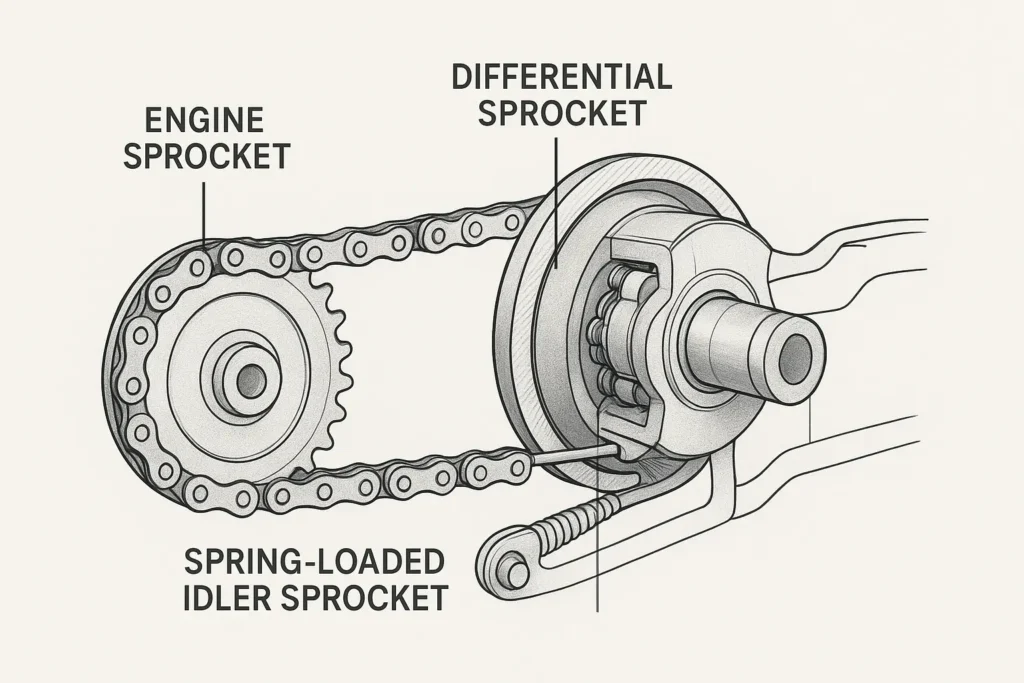
Differentials are complex gear arrangements that allow wheels on the same axle to rotate at different speeds, such as when a vehicle turns a corner. While we typically associate differentials with gears, chain-driven differentials exist, particularly in go-karts, ATVs, and some tracked vehicles.
In these setups, the idler sprocket plays a vital role in torque management and alignment. A differential housing may have a sprocket attached to it, driven by a chain from the engine. Because the suspension of the vehicle moves up and down, the distance between the engine (transmission) and the differential changes constantly.
An idler sprocket in this context is often spring-loaded. It acts as a dynamic tensioner. As the suspension compresses and the chain path shortens, the spring-loaded idler retracts to prevent binding. As the suspension extends, the idler pushes out to keep the chain tight. Without this dynamic idler action, the chain would either snap when the vehicle hits a bump or fall off when the suspension unloads.
Types of Idler Sprockets
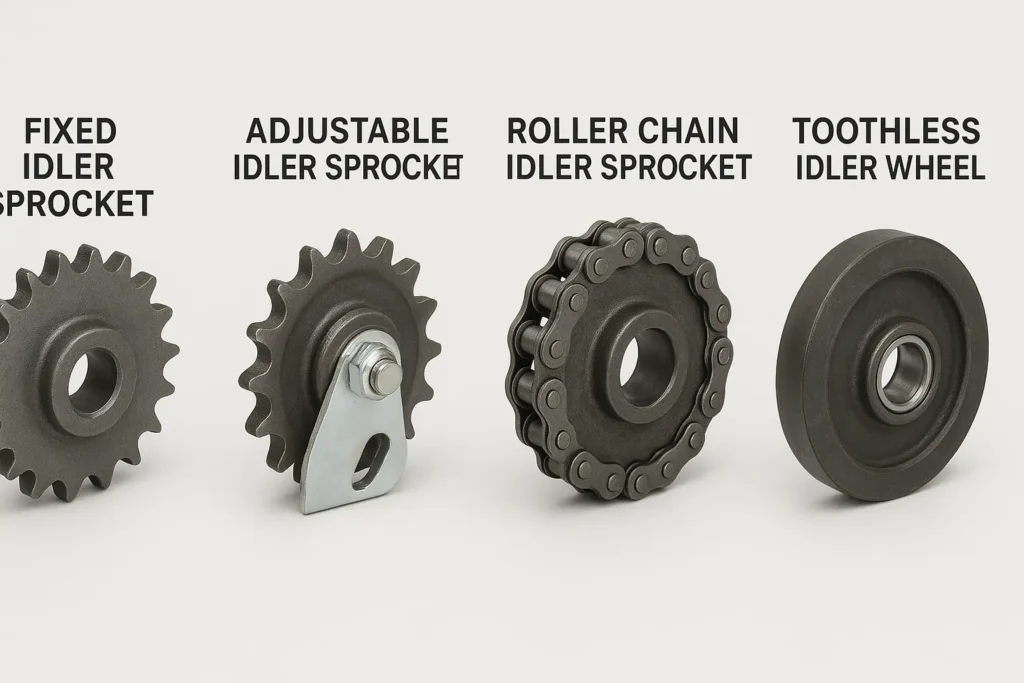
Not all idlers are created equal. Engineers select specific types based on the environment, load, and adjustment requirements of the machine.
Fixed Idler Sprockets
These are mounted permanently in one position. They are used when the drive center distance is fixed, and the designer wants to route the chain around an obstacle or ensure a specific amount of chain wrap. They are simple, robust, and require no adjustment, but they cannot compensate for chain elongation over time.
Adjustable Idler Sprockets
These are mounted on slots or pivoting arms. As the chain wears and elongates, the operator can physically move the idler sprocket to take up the slack and then lock it back into place. These are common in industrial conveyors where regular maintenance intervals allow for manual re-tensioning.
Roller Chain Idler Sprocket
This is the standard idler designed for ANSI roller chains (e.g., #40, #60, #80 chains). They feature a specific tooth profile designed to mesh perfectly with the rollers of the chain. These are found in the vast majority of industrial power transmission applications. They often come with sealed ball bearings pre-installed for maintenance-free operation.
Toothless and Specialty Idlers
Sometimes, teeth aren’t necessary. “wear strip” style idlers or simple roller wheels can be used on the back of the chain (the flat side) rather than engaging the rollers. These are useful in high-speed applications where tooth engagement noise is a concern, or in low-friction setups where the goal is simply to support a long span of chain to prevent sagging.
Common Applications of Idler Sprockets
The versatility of the idler sprocket makes it a staple across various industries.
- Conveyor and Material Handling: Long conveyor belts driven by chains rely on idlers to support the return side of the chain, preventing it from dragging on the floor or the machine frame.
- Agricultural Machinery: Combine harvesters and balers use complex, serpentine chain drives to power multiple shafts from a single engine. Idlers are used to route the chain around corners and ensure every driven shaft receives power.
- Automotive: While timing belts are common, many engines use timing chains. These systems utilize hydraulic or spring-loaded idlers (tensioners) to ensure precise valve timing.
- Construction: Heavy machinery like trenchers and excavators use massive chain drives for tracks or digging mechanisms. Heavy-duty idler sprockets are required to withstand the immense shock loads and debris common in these environments.
Benefits of Using Idler Sprockets
Integrating an idler into a system adds a component, but the return on investment is substantial.
Extended Chain Life
By maintaining proper tension, idlers prevent the “snapping” action that occurs when a slack chain suddenly tightens. This reduces fatigue stress on the chain plates and pins, significantly extending the operational life of the chain.
Reduced Maintenance Costs
A system with proper tension and alignment wears evenly. This means fewer emergency shutdowns for broken chains and less frequent replacement of expensive drive sprockets.
Improved System Efficiency
A vibrating, slapping chain wastes energy. By smoothing out the motion, an idler ensures that more of the motor’s power is actually transferred to the load rather than being lost to friction and noise.
Enhanced Operational Stability
In precision applications, such as printing presses or packaging machines, jerky motion is unacceptable. Idler sprockets ensure that the drive output is smooth and consistent, resulting in higher product quality.
How to Choose the Right Idler Sprocket
Selecting the correct idler is not a guessing game. It requires checking specific parameters of your drive system.
1. Chain Size and Pitch Compatibility
The most obvious factor is matching the chain. If you are running a #50 roller chain, you must use a sprocket idler with a #50 pitch profile. Mismatched pitches will cause immediate binding and damage.
2. Load Capacity and Operating Speed
The bearing inside the idler determines its limits. High-speed applications require high-precision ball bearings. Heavy-load, slow-moving applications might be better suited for bronze bushings.
3. Mounting Style and Adjustability
How will the idler be attached? Do you have a shaft available, or do you need an idler with a built-in stud that can be bolted to the frame? Furthermore, consider if you need a spring-loaded tensioning arm or a simple slot for manual adjustment.
4. Environmental and Material Considerations
If the machine operates in a food processing plant, you may need stainless steel or plastic idlers to prevent rust and contamination. In high-heat environments, standard bearing grease might fail, requiring high-temperature idlers.
Idler Sprocket Maintenance and Best Practices
While idlers reduce the maintenance of the chain, they require some attention themselves.
- Inspection: Regularly check the idler for free rotation. If it feels “gritty” or stiff, the bearing is likely failing.
- Teeth Wear: Inspect the teeth. If they are becoming hooked or pointed (shark-toothed), the sprocket is worn out and needs replacement.
- Alignment: Ensure the idler is perfectly in line with the drive and driven sprockets. Even a slight misalignment can cause the chain to ride up on the side of the idler teeth.
- Replacement: A general rule of thumb is to inspect the idler every time you replace the chain. If the idler teeth show significant wear, replace it. Putting a new chain on old, worn sprockets will ruin the new chain rapidly.
Common Problems Caused by Incorrect Idler Selection
Choosing the wrong idler can create more problems than it solves.
- Excessive Chain Wear: Using an idler with too few teeth can force the chain to bend too sharply. This “chordal action” increases wear on the chain joints. Generally, avoid using idlers with fewer than 17 teeth if possible.
- Noise and Vibration: If the idler is mounted on a flimsy bracket, it can amplify vibration rather than dampen it. Rigid mounting is crucial.
- Reduced System Performance: If an idler is placed on the drive side (the tight side) of the chain instead of the slack side, it will be subjected to the full tension of the load. This can shatter the idler bearing and cause immediate system failure.
FAQs About Idler Sprockets
What is the purpose of an idler sprocket?
The primary purpose is to maintain tension, guide the chain around obstacles, and prevent vibration on the slack side of a chain drive system.
Are idler sprockets powered?
No. Idler sprockets rotate freely. They do not transmit power; they only guide and support the transmission medium (the chain).
Can an idler sprocket replace a tensioner?
An idler sprocket is the contacting part of a tensioner assembly. A tensioner usually consists of a bracket or arm (often spring-loaded) and the idler sprocket itself. You can use a manually adjustable idler sprocket as a fixed tensioner.
When should a roller chain idler sprocket be used?
You should use one whenever the center distance between shafts cannot be adjusted to take up slack, when the chain span is long enough to cause sagging, or when the chain needs to be routed around a specific path.
Conclusion
The idler sprocket is a testament to the idea that not every important player in a team needs to be the one generating the power. In the world of mechanics, control and stability are just as valuable as force.
By managing tension, absorbing shock, and guiding the chain, the sprocket idler ensures that industrial systems run smoothly, quietly, and efficiently. Whether you are dealing with a simple roller chain setup or a complex differential, choosing the right idler and maintaining it correctly is the key to reliable performance. Next time you see a chain drive in motion, look for the wheel that’s just “idling” along—it’s likely the one holding the whole operation together.