
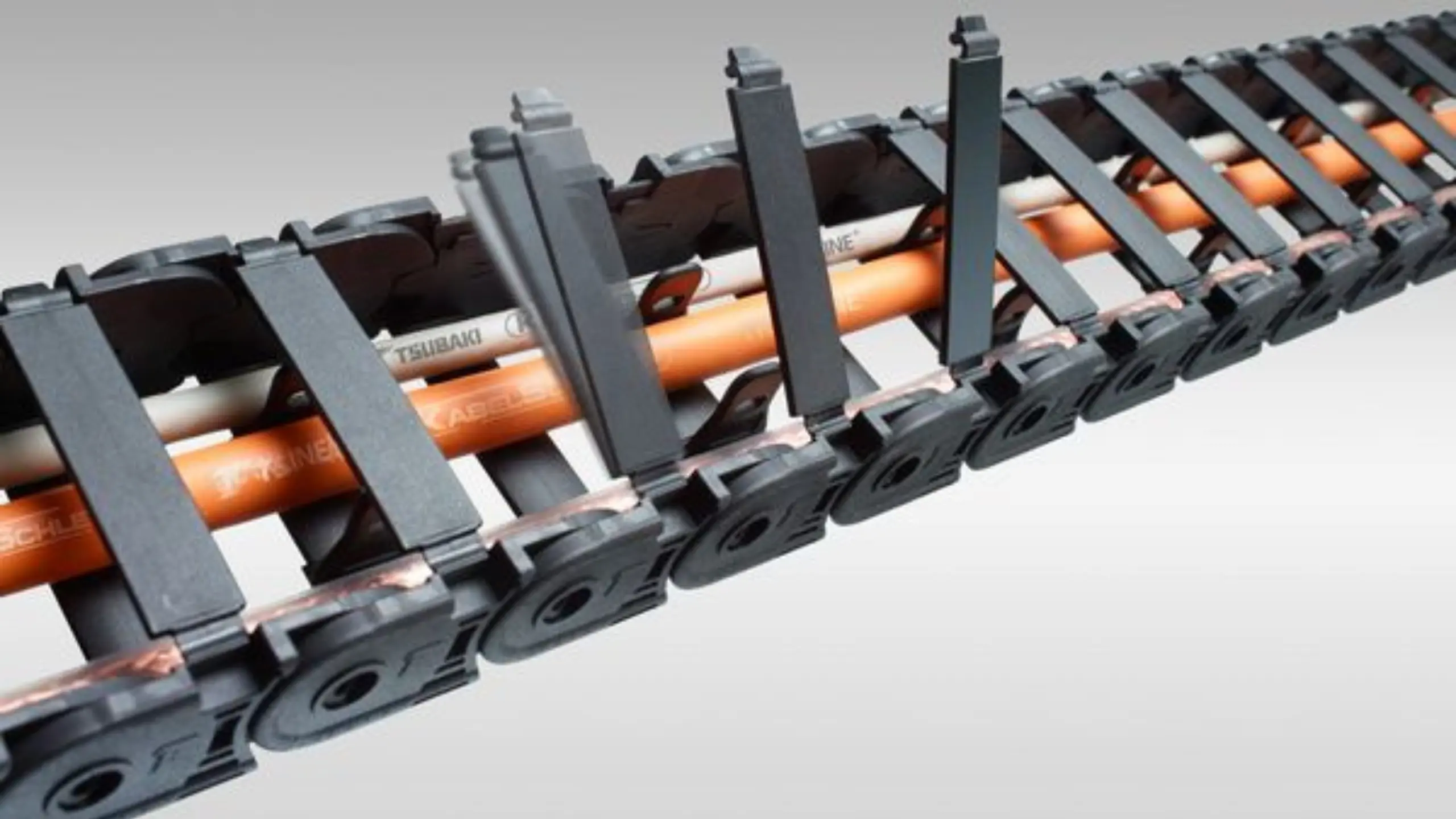
Complete Guide to Cable Tracks & Cable Carriers

In any automated system, from massive industrial cranes to complex 3D printers, the smooth and reliable movement of machinery is critical. Behind the scenes, a collection of essential cables and hoses supplies the power, data, and fluids that keep these systems running. But what protects these vital lines from the constant bending, twisting, and friction they endure? The answer is a component that is often overlooked but absolutely essential: the cable carrier.
Also known as a cable track, drag chain, or energy chain, these devices are the backbone of dynamic cable management. They provide a protective pathway for cables and hoses, guiding them safely as a machine moves back and forth. Without them, cables would quickly wear out, tangle, or break, leading to costly downtime and hazardous operating conditions.
This guide explores everything you need to know about cable tracks and cable carriers. We will cover what they are, the different types available, the materials they are made from, and how to select the perfect one for your application. By understanding these components, you can ensure the longevity and efficiency of your automated machinery.
What Are Cable Carriers and Cable Tracks?
A cable carrier is a flexible, hollow structure designed to house and guide cables, hoses, and other conduits connected to moving machinery. Think of it as an articulated protective shell that moves along with the machine part it’s attached to. As the machine travels along a path, the cable track prevents the cables from sagging, kinking, or getting caught on surrounding equipment.
These systems are crucial in applications where there is repetitive motion, such as on robotic arms, CNC machines, gantry cranes, and automated assembly lines.
The primary function of a cable and hose carrier is to minimize stress on the internal lines by ensuring they bend at a controlled, predefined radius. This controlled bending prevents conductor breakage and insulation wear, which are common failure points for unsupported cables.
While the terms “cable carrier” and “cable track” are often used interchangeably, they both refer to the same fundamental device. Other common names include drag chains and energy chain cable carriers, reflecting their function of dragging the utility lines along and supplying energy to the moving parts.
Why Are Cable Carriers Essential?

The importance of a properly implemented cable management system cannot be overstated. By organizing and protecting cables and hoses, these carriers deliver several key benefits that contribute directly to operational efficiency and safety.
1. Enhanced Safety
Exposed, moving cables are a significant workplace hazard. They can become tripping hazards for personnel or get snagged on other machine parts, potentially causing severe equipment damage or injury. Cable carriers enclose these lines within a secure housing, eliminating these risks and creating a safer operating environment.
2. Increased Lifespan of Cables and Hoses
The single most important benefit of a cable carrier is its ability to extend the service life of the cables and hoses it protects. Unmanaged cables are subjected to uncontrolled bending, abrasion, and torsional stress, which quickly leads to material fatigue and failure. A cable track forces the cables to bend only at a specific radius, distributing the stress evenly and preventing premature wear. This protection drastically reduces the frequency of cable replacement, saving both time and money.
3. Reduced Downtime
Equipment downtime is one of the most significant costs in any industrial operation. A broken cable or a burst hose can bring an entire production line to a halt. By protecting these vital components from damage, cable carriers improve the overall reliability of the machinery. This proactive approach to cable management minimizes unexpected failures and the associated downtime, keeping operations running smoothly.
4. Improved System Performance
Tangled and disorganized cables can impede the movement of a machine, leading to inaccurate positioning and reduced operational speed. Cable carriers ensure that the supply lines move in a predictable and controlled manner, allowing the machine to operate at its maximum speed and acceleration without interference. This leads to higher productivity and better overall performance.
Types of Cable Carriers
Cable carriers come in a wide variety of designs, each suited for different applications and environmental conditions. They can be broadly categorized by their material and their structure.
Open vs. Closed Cable Carriers
The most basic distinction is between open and closed chain types.
- Open-Style Carriers: These are the most common type and feature crossbars that can be snapped open or removed. This design allows for easy installation and inspection of cables without having to thread them through the entire length of the carrier. They are ideal for environments where dirt and debris are not a major concern.
- Closed-Style Carriers (Tubes): Closed carriers form a fully enclosed tube around the cables and hoses. This design provides maximum protection from external contaminants like hot metal chips, weld splatter, dirt, and chemical splashes. They are commonly used in harsh industrial environments such as welding applications, machine tools, and woodworking shops.
By Material
The material of a cable carrier is a critical factor that determines its durability, weight, and suitability for different environments.
Plastic (Nylon) Cable Carriers
Plastic, typically high-performance polyamide (nylon), is the most widely used material for modern cable carriers. It offers an excellent balance of strength, flexibility, and cost-effectiveness.
Advantages:
- Lightweight: Plastic carriers reduce the overall moving mass, allowing for higher speeds and accelerations.
- Corrosion-Resistant: They are immune to rust and resistant to many chemicals, making them suitable for wet or corrosive environments.
- Low Noise: Plastic chains operate more quietly than their metal counterparts.
- Modular Design: They are easy to assemble and modify, with snap-fit links that can be adjusted in length.
Steel Cable Carriers
Steel cable carriers are built for the most demanding applications where extreme strength and heat resistance are required.
Advantages:
- High Strength: Steel carriers can support very heavy cable and hose packages over long, unsupported spans.
- Heat Resistance: They can withstand high temperatures, making them ideal for foundries, steel mills, and other hot environments.
- Durability: They are extremely robust and can resist severe impacts.
Hybrid Cable Carriers
Some designs combine the benefits of both plastic and steel. Hybrid carriers typically feature plastic sidebands with aluminum or steel crossbars. This construction provides the lightweight and corrosion-resistant properties of plastic while offering the increased rigidity and span capability of metal crossbars.
Key Factors for Selecting the Right Cable Carrier

Choosing the right cable carrier is crucial for ensuring the reliability and longevity of your automated system. A poor choice can lead to premature failure and costly downtime. Consider these factors when making your selection.
1. Bend Radius
The bend radius is the most critical parameter in carrier selection. It refers to the minimum radius at which the carrier can bend without damaging the cables inside. The rule of thumb is to choose a bend radius that is larger than the recommended minimum bend radius of the stiffest cable or hose in your package. A larger radius will always reduce stress and extend cable life.
2. Cable and Hose Package
You need to determine the total number, diameter, and weight of all the cables and hoses that will be placed inside the carrier. This information will dictate the required inner height and width of the carrier. It’s good practice to leave at least 10% of extra space around each cable for movement and an additional 10-20% of total space for future additions. This prevents cables from binding and rubbing against each other.
3. Travel Length and Speed
The total distance the carrier needs to travel and the speed at which it will move are fundamental design considerations.
- Short Travel (Gliding): For most applications, the carrier glides on itself, with the upper run sliding on the lower run.
- Long Travel (Unsupported): For shorter distances where the carrier does not touch the ground, it’s called an unsupported or “flying” application. The carrier must have enough inherent rigidity to support its own weight plus the weight of the cables over this span.
- Long Travel (Supported): For very long travel distances, the carrier needs a guide trough to support its weight and ensure smooth movement.
4. Environmental Conditions
The operating environment plays a significant role in material selection.
- Will the carrier be exposed to chemicals, oils, or coolants? If so, a high-grade plastic or stainless steel might be necessary.
- Is the environment extremely hot or cold? Steel is often the choice for high-heat applications.
- Will there be exposure to metal chips, weld splatter, or abrasive dust? A closed-style tube carrier is the best option for protection.
5. Mounting Configuration
How the cable carrier will be mounted to the machine is also important. The end brackets must be securely fastened to both the fixed and moving ends of the machine to ensure stable operation. Manufacturers offer a variety of mounting bracket options to suit different machine designs.
Cable Management Beyond the Basics
While the term cable tv carriers might bring to mind the infrastructure used for television networks, in the context of industrial automation, it can sometimes refer to specialized carriers for sensitive data or coaxial cables. In these cases, ensuring proper separation between power and data cables within the carrier is vital to prevent electromagnetic interference (EMI). Most manufacturers offer internal separators and shelving systems that create dedicated compartments for different types of cables, preserving signal integrity.
These energy chain cable carriers are sophisticated systems designed for optimal performance. By carefully planning the layout of the cables within the carrier and using the correct accessories, you can create a clean, organized, and highly reliable system.
Your Path to Reliable Automation
Cable tracks and cable carriers are far more than simple accessories; they are fundamental components that ensure the reliability, safety, and efficiency of modern automated machinery. From lightweight plastic chains in a cleanroom environment to heavy-duty steel drag chains in a steel mill, these systems protect the lifelines of our industrial world.
By taking the time to understand the different types, materials, and selection criteria, you can choose the perfect solution for your application. A well-designed cable management system will pay for itself many times over through reduced downtime, extended component life, and safer operations.
The next time you see a robotic arm or a gantry crane in motion, look for the humble cable carrier working tirelessly behind the scenes, making it all possible.