Sprockets are essential mechanical components used in a wide range of machinery to transfer power efficiently from one shaft to another. Understanding what is a sprocket is important for anyone working with industrial equipment, conveyors, or even bicycles, as these components ensure smooth and reliable motion in a system.
A chain and sprocket system works by engaging the teeth of the sprocket with the links of a chain. This direct engagement prevents slippage and allows for precise timing, making sprockets ideal for high-load applications and systems requiring consistent performance.
Sprockets come in various designs, including roller chain sprockets and custom sprockets, and can be made from materials like steel, stainless steel, or engineering plastics. Knowing the right type and specifications helps improve efficiency, reduce maintenance, and extend the life of your machinery.
Understanding What Is a Sprocket ?
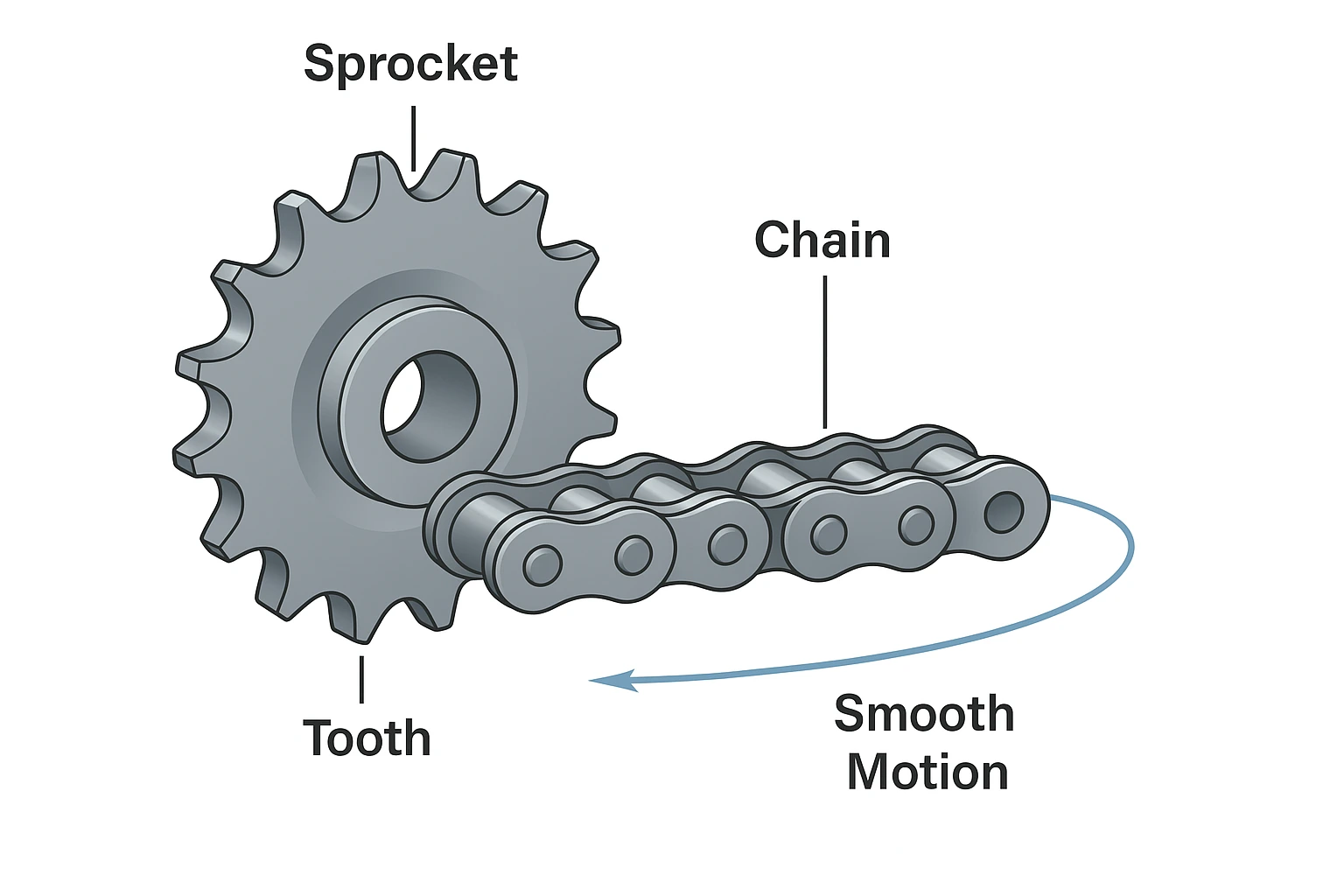
A sprocket is a wheel with teeth that mesh with the links of a chain, creating a reliable method for transferring mechanical power from one shaft to another. As the sprocket rotates, it drives the chain, ensuring smooth and consistent motion. Unlike pulleys that rely on friction, chain sprockets provide positive engagement, preventing slippage and maintaining precise timing in machinery.
Why Sprockets Are Important
They provide accurate synchronization between shafts, which is critical for high-precision machinery
They can handle heavy loads and high torque, making them suitable for demanding applications
They reduce vibration and energy loss, improving overall system efficiency
They contribute to smoother operation, extending the life of both the chain and connected components
Sprockets are used extensively in industries such as manufacturing, agriculture, automation, automotive, and food processing. In all these applications, the combination of chain and sprocket ensures reliable, efficient, and durable power transmission. From standard roller chain sprockets to custom sprockets designed for unique machinery, sprockets play a crucial role in keeping systems running smoothly and minimizing maintenance requirements.
How a Chain and Sprocket System Works
A chain and sprocket system works by having the teeth of the sprocket engage precisely with the rollers of the chain. This engagement allows the chain to move consistently and efficiently as the sprocket rotates. When the sprocket and chain are properly aligned, the system can transmit mechanical power smoothly, handle heavy loads, and maintain accurate motion without slipping or losing efficiency.
Benefits of Using a Chain and Sprocket System
Consistent and reliable power transfer across shafts
Requires minimal maintenance compared to belt-driven systems
Handles high torque and heavy loads effectively
Performs well in harsh or demanding environments
Increases longevity when paired with a correctly sized roller chain sprocket
Selecting the right sprocket for your chain is essential. Even a small mismatch in pitch, tooth count, or bore size can result in excessive noise, rapid wear, or premature chain failure. Ensuring that the sprocket and chain are correctly matched helps maintain smooth operation and prevents unnecessary downtime.
Using the correct combination of chain and sprockets not only reduces maintenance costs but also maximizes the lifespan of the system. Proper alignment, attention to specifications, and careful installation are key factors in achieving optimal performance and reliability in any machinery.
Parts of a Sprocket
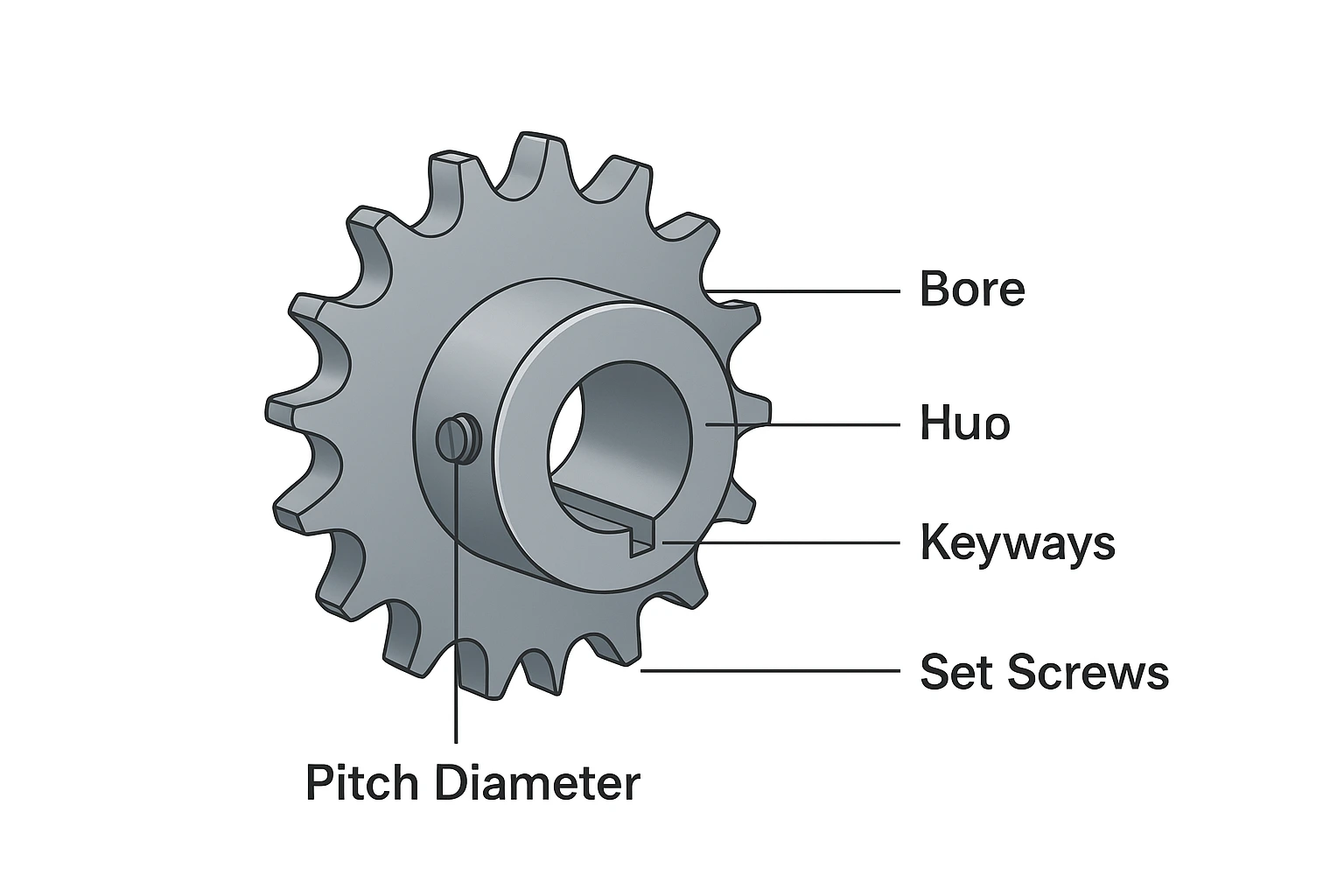
Understanding the parts of a sprocket is essential for selecting the right one for your machinery and ensuring smooth, efficient operation. Each part plays a crucial role in how the sprocket interacts with the chain and handles mechanical loads.
Teeth
The teeth of a sprocket engage with the chain links or rollers. Their shape, size, and spacing directly affect how smoothly the chain moves, the level of noise, and the overall lifespan of both the sprocket and the chain. Properly designed teeth reduce wear and improve system efficiency.
Pitch Diameter
The pitch diameter is the diameter of an imaginary circle that passes through the center of the chain rollers. Choosing a sprocket with the correct pitch diameter ensures smooth movement, proper alignment, and consistent power transmission across the system.
Bore
The bore is the central hole that allows the sprocket to mount securely on a shaft. Some sprockets come with a machined bore ready for installation, while others are supplied as plain stock bores to allow customization for specific shaft sizes.
Hub
The hub provides strength, stability, and support to the sprocket. Standard sprockets may have a single hub, while heavy-duty or high-torque applications often use double hubs for added durability.
Keyways and Set Screws
Keyways and set screws secure the sprocket to the shaft, preventing rotation or misalignment during operation. These features ensure that the chain and sprocket system runs reliably and efficiently under load.
Important Sprocket Specifications
When selecting a chain roller sprocket, it is essential to consider several key specifications to ensure reliable operation and long-lasting performance. Choosing the correct dimensions and features can prevent premature wear, reduce maintenance, and optimize power transmission in your machinery.
Pitch: The pitch must match the chain exactly. An incorrect pitch can cause slipping, excessive wear, and noise.
Number of Teeth: The tooth count affects speed, torque, and the smoothness of motion. A higher number of teeth generally reduces wear and provides smoother operation.
Bore Size: The bore must fit the shaft or bushing accurately. A proper fit prevents wobbling and ensures stability during rotation.
Caliper Diameter: This ensures proper clearance between the sprocket and surrounding components, avoiding interference or chain misalignment.
Hub Diameter and Length-Through-Bore (LTB): These dimensions are important for mounting, strength, and support, especially in heavy-duty applications.
Number of Strands: Some systems require multiple parallel chains. Multi-strand sprockets must be designed to distribute load evenly across all strands.
Considering all these specifications carefully ensures that your sprockets perform efficiently, remain durable under load, and provide smooth, trouble-free operation in any chain and sprocket system.
Common Materials for Sprockets
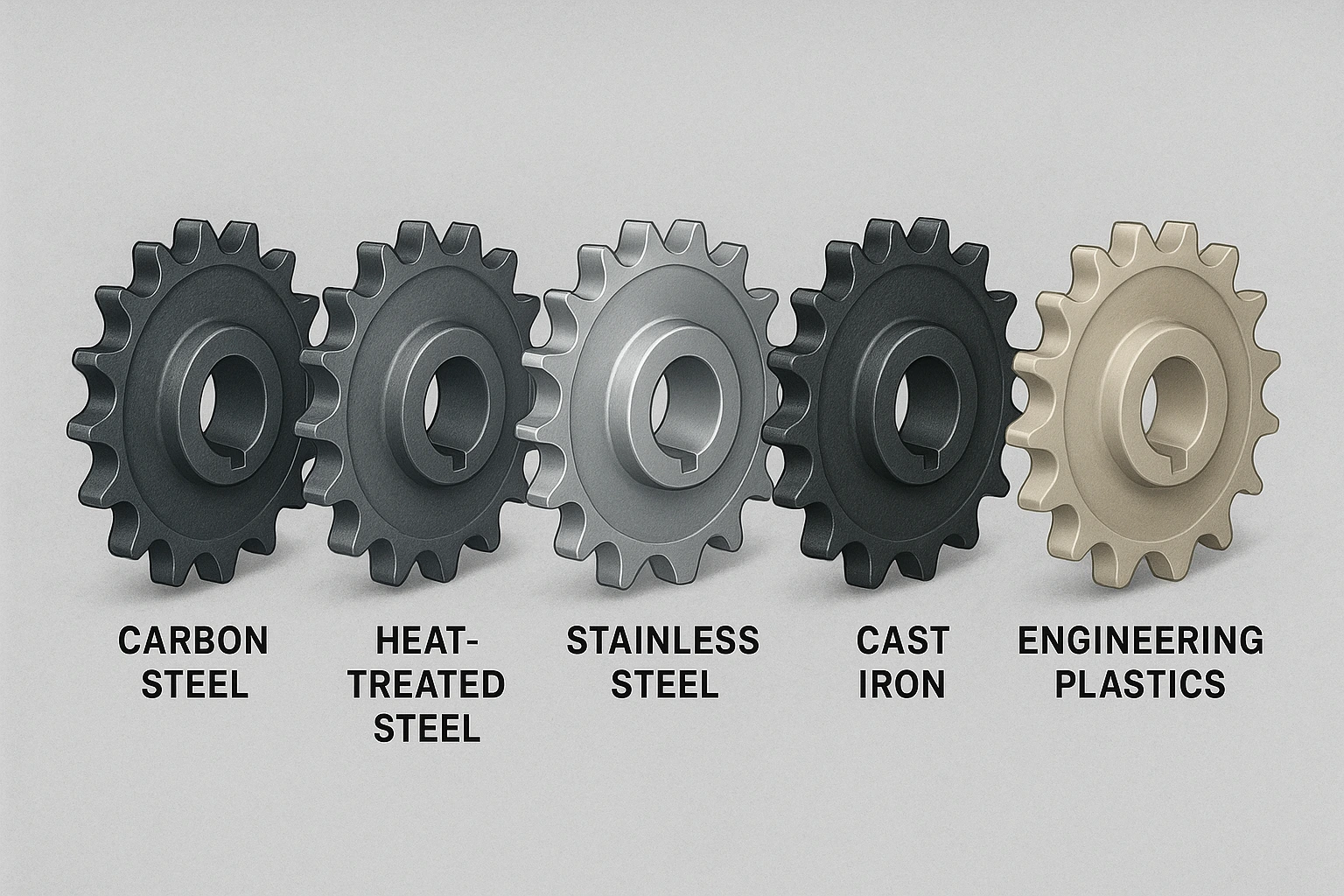
Choosing the right material for a sprocket is crucial for ensuring durability, performance, and longevity in any chain and sprocket system. The material determines how well the sprocket can handle loads, resist wear, and operate in different environmental conditions.
Carbon Steel: Strong, durable, and cost-effective, carbon steel is suitable for general-purpose applications where moderate wear resistance is sufficient.
Heat-Treated Steel: Ideal for heavy-duty operations, heat-treated steel offers excellent wear resistance and can withstand high torque and stress.
Stainless Steel: Resistant to corrosion and rust, stainless steel is perfect for food processing, pharmaceutical, or wet environments where hygiene and longevity are critical.
Cast Iron: Durable and capable of handling low-speed, heavy-load applications, cast iron is often used in industrial machinery and conveyor systems.
Engineering Plastics: Lightweight, corrosion-resistant, and often quieter than metal sprockets, engineering plastics are used in sanitary, low-load, or noise-sensitive environments.
Selecting the appropriate material ensures that your sprocket performs reliably, reduces maintenance needs, and extends the life of your chain and sprocket system, no matter the application or operating conditions.
Types of Sprockets and Their Applications
Sprockets come in a variety of types, each designed to meet specific mechanical and operational needs. Choosing the right type ensures efficient power transmission, reduces wear, and improves the performance of your chain and sprocket system.
Roller Chain Sprockets: The most common type, these sprockets are compatible with standard roller chains and used in a wide range of machinery.
Single-Pitch and Double-Pitch Sprockets: Single-pitch sprockets are standard in most machinery, while double-pitch sprockets are ideal for conveyor systems where extended chain life is desired.
Double Single Sprockets: Designed to accommodate two chains on one tooth pattern, saving space and supporting dual-chain applications. Commonly used in packaging machines, conveyors, and automated assembly lines.
Drum Sprockets: Larger sprockets for heavy-duty conveyor systems, with a rounded design that distributes load evenly and reduces stress on the chain.
Split Sprockets: Two-piece sprockets that simplify installation and removal without disassembling the shaft. They reduce downtime and are perfect for hard-to-reach installations.
Idler Sprockets: Used to guide chains and maintain tension without driving them, commonly found in long conveyor systems or setups with fluctuating tension.
Stainless Steel Sprockets: Resistant to corrosion and ideal for wet, hygienic, or chemically sensitive environments.
Tapered and Bushed Sprockets: Feature removable bushings for secure mounting and easy installation.
Custom Sprockets: Designed for non-standard applications where size, tooth count, or material requirements differ from standard offerings.
Understanding these types of sprockets and their applications helps in selecting the most suitable component for your machinery, ensuring reliable operation, longer chain life, and improved overall efficiency.
Plain Stock Bore Sprockets
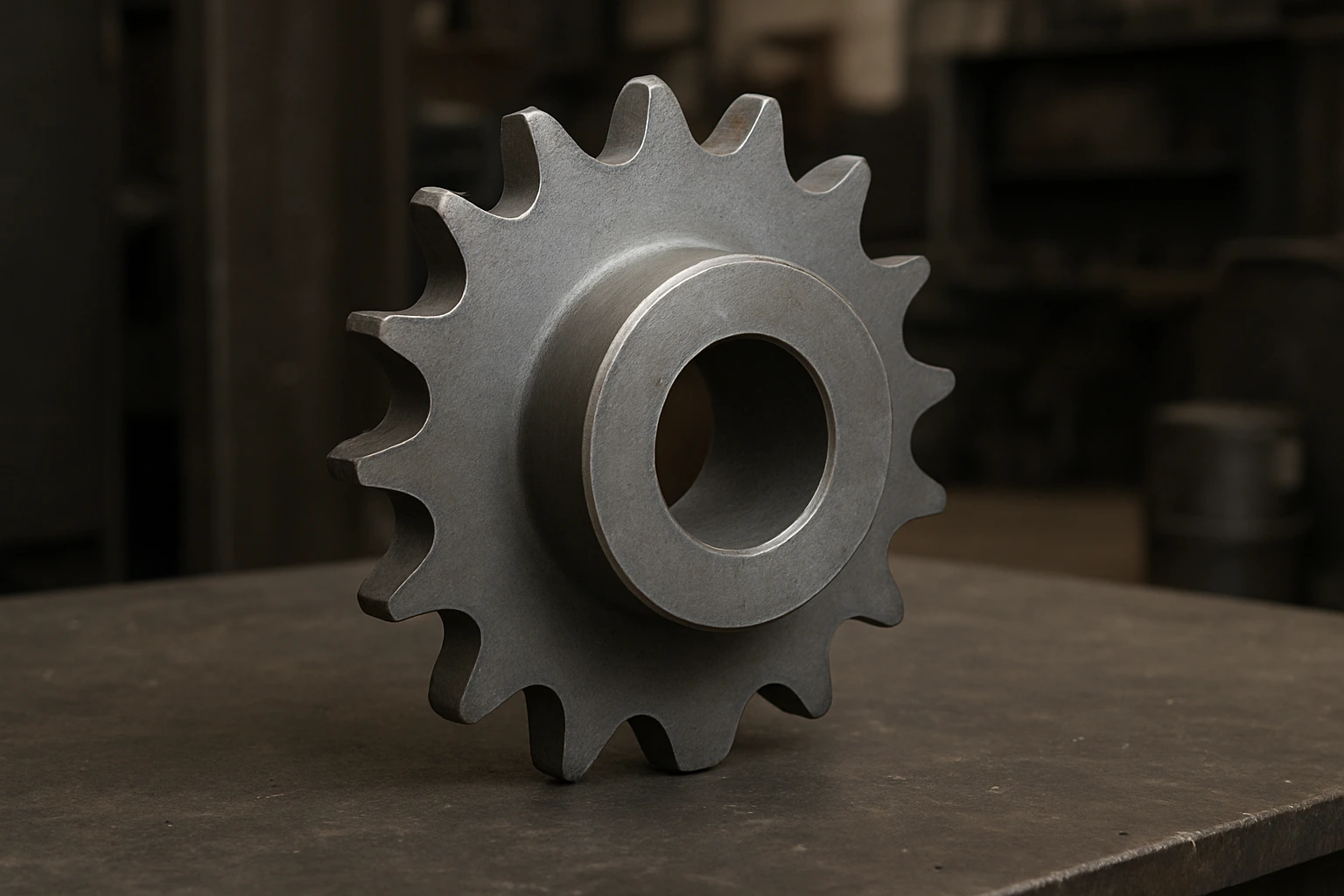
Plain stock bore sprockets are sprockets that come with an unmachined bore, giving you the flexibility to customize them to fit unique shaft sizes or specific mounting requirements. This makes them highly versatile for various industrial applications where standard sprockets may not meet the machinery’s needs.
Advantages
High Flexibility: Can be machined or adapted to suit different shafts and equipment.
Ideal for Specialized Machinery: Perfect for applications where standard bore sizes are insufficient.
Versatile Applications: Can be used across industries such as manufacturing, automation, and conveyors, providing reliable performance even in custom setups.
Using plain stock bore sprockets allows engineers and operators to design chain and sprocket systems tailored to exact specifications, ensuring proper alignment, smooth operation, and extended system life.
Additional Sprocket Options
Sprockets can be enhanced with:
Hardened teeth for longer life
Lightweight designs
Food-grade materials
Anti-corrosion coatings
Custom machining for bore and keyways
These enhancements improve durability and performance.
How to Choose the Right Sprocket
Selecting the right sprocket is essential for ensuring smooth operation, efficient power transmission, and a long chain life. A properly chosen sprocket can prevent premature wear, reduce maintenance needs, and minimize machine downtime, making your chain and sprocket system more reliable and cost-effective.
When choosing a sprocket, consider the following:
Chain Pitch Compatibility: The sprocket’s pitch must match the chain precisely to avoid slippage or accelerated wear.
Tooth Count: Affects speed, torque, and smoothness of motion; selecting the correct number ensures optimal performance.
Bore Size: Must fit the shaft accurately to provide stability and prevent wobbling.
Material Selection: Choose a material suited to your operating environment, whether it’s high-load, corrosive, or hygienic conditions.
Number of Strands: For multi-strand systems, ensure the sprocket accommodates the required number of chains for load distribution.
By carefully considering these factors, you can select a sprocket that enhances efficiency, reduces maintenance costs, and extends the lifespan of your chain and sprocket system in any application.
Choosing a Sprocket for Your Chain
Selecting the right sprocket for your chain is critical for ensuring efficient power transmission, durability, and smooth operation. The correct sprocket reduces wear, vibration, and noise while extending the life of both the chain and the sprocket in your chain and sprocket system.
Tips for Compatibility
- Match Pitch and Roller Diameter: Ensure the sprocket’s pitch and roller diameter align with the chain to prevent slipping and uneven wear.
- Use Multi-Strand Sprockets When Needed: For systems requiring multiple chains, multi-strand sprockets distribute the load evenly.
- Ensure Proper Alignment: Correct alignment minimizes friction, vibration, and premature wear on both chain and sprocket.
- Maintain Correct Chain Tension: Proper tension ensures smooth operation and prevents unnecessary strain.
- Follow Manufacturer Guidelines: Adhering to the chain and sprocket manufacturer’s recommendations guarantees optimal performance and safety.
By following these tips, you can maintain a reliable, long-lasting, and quiet chain and sprocket system, reducing downtime and maintenance costs while ensuring consistent operation across all applications.
Applications of Sprockets
Sprockets are used across industries where precision and reliability are required:
Material handling and conveyor systems
Food and beverage production
Agricultural machinery
Automotive manufacturing
Robotics and automation
Industrial machinery
A correctly chosen chain and sprocket system guarantees consistent performance and longer equipment life.
Conclusion
Understanding what is a sprocket and how different types of sprockets work helps you select the right component for your machinery. From standard roller chain sprockets to custom sprockets, each type serves a unique purpose. Choosing the right sprocket and maintaining proper alignment ensures smooth power transfer, reduces wear, and improves overall equipment efficiency.