

Roller Chain Size Chart Complete Guide – Ohiorollerchain

Selecting the right roller chain is one of the most important decisions in power transmission and conveyor system design. Whether you’re running a small mechanical drive or a massive industrial conveyor, the roller chain size chart is the key to finding the perfect fit.
At Ohio Roller Chain, we’ve created this comprehensive roller chain dimensions chart to help engineers, maintenance teams, and machinery builders worldwide choose the correct chain for any application. This guide covers every configuration — from single-strand to 12-strand heavy-duty chains — following ANSI/ISO standards to ensure global compatibility.
Why the Roller Chain Size Chart Matters
Each roller chain type has specific measurements that affect how it performs under load — such as pitch, roller diameter, inner width, and tensile strength. Using the correct size prevents premature wear, misalignment, and power loss.
By referencing a detailed chain dimensions chart, you can:
- Match your roller chain perfectly with sprocket teeth profiles
- Ensure correct load-bearing capacity
- Improve efficiency and reduce maintenance downtime
- Extend the lifespan of your entire drive system
At Ohio Roller Chain, we manufacture and distribute all major ANSI and ISO roller chain sizes, ensuring precision, performance, and reliability in every link.
Understanding Roller Chain Configurations
Roller chains come in multiple “strand” configurations — the number of parallel link rows determines the load capacity.
Here’s a quick overview:
- Single-Strand (Simplex) – Standard for general power transmission
- Double-Strand (Duplex) – Ideal for higher torque and load handling
- Triple-Strand (Triplex) – Used in heavy-duty and industrial applications
- Quadruple to Duodenary (4–12 Strands) – Designed for conveyors, crushers, and steel plants
Each configuration below includes its own roller chain size chart so you can quickly compare specifications and choose the right option.
Single-Strand Roller Chain Size Chart (Simplex)
The single-strand roller chain — also known as a simplex chain — is the most commonly used design. It’s lightweight, easy to install, and ideal for a wide range of applications from bicycles to small conveyor systems.
| Chain No. | Pitch (mm) | Roller Dia. (mm) | Inner Width (mm) | Pin Dia. (mm) | Pin Length (mm) | Plate Height (mm) | Plate Thickness (mm) | Tensile Strength (kN) |
|---|---|---|---|---|---|---|---|---|
| 25 | 6.35 | 3.30 | 3.18 | 2.31 | 7.85 | 7.85 | 0.80 | 5.0 |
| 35 | 9.525 | 5.08 | 4.78 | 3.58 | 10.24 | 9.00 | 1.30 | 8.9 |
| 40 | 12.70 | 7.92 | 7.85 | 3.96 | 14.73 | 12.00 | 1.50 | 13.3 |
| 50 | 15.875 | 10.16 | 9.53 | 5.08 | 19.56 | 15.00 | 2.00 | 26.7 |
| 60 | 19.05 | 11.91 | 12.70 | 5.94 | 23.60 | 18.00 | 2.40 | 31.0 |
| 80 | 25.40 | 15.88 | 15.88 | 7.92 | 30.99 | 24.00 | 3.20 | 54.0 |
| 100 | 31.75 | 19.05 | 19.05 | 9.54 | 38.61 | 30.00 | 4.00 | 85.0 |
| 120 | 38.10 | 22.23 | 25.40 | 11.10 | 45.72 | 36.00 | 4.80 | 120.0 |
Simplex chains are the most economical choice for moderate power transmission and general machinery.
Double-Strand Roller Chain Size Chart (Duplex)
For applications that demand more torque and durability, the double-strand roller chain (or duplex chain) provides double the strength of the simplex version.
| Chain No. | Pitch (mm) | Roller Dia. (mm) | Inner Width (mm) | Pin Dia. (mm) | Pin Length (mm) | Plate Height (mm) | Plate Thickness (mm) | Tensile Strength (kN) |
|---|---|---|---|---|---|---|---|---|
| 40-2 | 12.70 | 7.92 | 7.85 | 3.96 | 26.0 | 12.00 | 1.50 | 26.6 |
| 50-2 | 15.875 | 10.16 | 9.53 | 5.08 | 33.0 | 15.00 | 2.00 | 53.4 |
| 60-2 | 19.05 | 11.91 | 12.70 | 5.94 | 39.5 | 18.00 | 2.40 | 62.0 |
| 80-2 | 25.40 | 15.88 | 15.88 | 7.92 | 52.5 | 24.00 | 3.20 | 108.0 |
| 100-2 | 31.75 | 19.05 | 19.05 | 9.54 | 65.0 | 30.00 | 4.00 | 170.0 |
Duplex chains are commonly used in packaging machines, conveyors, and lifting systems.
Triple-Strand Roller Chain Size Chart (Triplex)
Triplex roller chains provide maximum strength for high-load and high-speed applications. They’re used in heavy industrial drives and material-handling systems.
| Chain No. | Pitch (mm) | Roller Dia. (mm) | Inner Width (mm) | Pin Dia. (mm) | Pin Length (mm) | Plate Height (mm) | Plate Thickness (mm) | Tensile Strength (kN) |
|---|---|---|---|---|---|---|---|---|
| 40-3 | 12.70 | 7.92 | 7.85 | 3.96 | 37.8 | 12.00 | 1.50 | 40.0 |
| 50-3 | 15.875 | 10.16 | 9.53 | 5.08 | 48.0 | 15.00 | 2.00 | 80.0 |
| 60-3 | 19.05 | 11.91 | 12.70 | 5.94 | 58.5 | 18.00 | 2.40 | 93.0 |
| 80-3 | 25.40 | 15.88 | 15.88 | 7.92 | 78.5 | 24.00 | 3.20 | 162.0 |
| 100-3 | 31.75 | 19.05 | 19.05 | 9.54 | 97.5 | 30.00 | 4.00 | 255.0 |
Triplex roller chains are the backbone of mining, construction, and industrial transmission systems.
Multi-Strand Roller Chain Size Charts (4–12 Strands)
For extremely heavy-duty systems, roller chains can include up to 12 strands. These are used in large conveyor systems, crushers, and mechanical power plants.
Quadruple (4-Strand)
| Chain No. | Pitch (mm) | Roller Dia. (mm) | Pin Length (mm) | Tensile Strength (kN) |
|---|---|---|---|---|
| 40-4 | 12.70 | 7.92 | 49.5 | 53.0 |
| 60-4 | 19.05 | 11.91 | 77.0 | 124.0 |
Quintuplex (5-Strand)
| Chain No. | Pitch (mm) | Roller Dia. (mm) | Pin Length (mm) | Tensile Strength (kN) |
|---|---|---|---|---|
| 40-5 | 12.70 | 7.92 | 61.3 | 66.0 |
| 60-5 | 19.05 | 11.91 | 95.5 | 155.0 |
Sextuplex (6-Strand)
| Chain No. | Pitch (mm) | Roller Dia. (mm) | Pin Length (mm) | Tensile Strength (kN) |
|---|---|---|---|---|
| 40-6 | 12.70 | 7.92 | 73.0 | 79.0 |
| 60-6 | 19.05 | 11.91 | 114.0 | 186.0 |
Octuplex (8-Strand)
| Chain No. | Pitch (mm) | Roller Dia. (mm) | Pin Length (mm) | Tensile Strength (kN) |
|---|---|---|---|---|
| 40-8 | 12.70 | 7.92 | 96.0 | 106.0 |
| 80-8 | 25.40 | 15.88 | 197.5 | 432.0 |
Duodenary (12-Strand)
| Chain No. | Pitch (mm) | Roller Dia. (mm) | Pin Length (mm) | Tensile Strength (kN) |
|---|---|---|---|---|
| 40-12 | 12.70 | 7.92 | 145.0 | 159.0 |
| 100-12 | 31.75 | 19.05 | 370.0 | 1020.0 |
Drive Chain Sizes Chart – Quick Reference Guide
A drive chain sizes chart helps identify the correct chain size for power transmission systems in industrial, agricultural, and mechanical applications. Selecting the right drive chain size is essential for smooth operation, load capacity, and long service life. Chain sizes are typically defined by pitch, roller diameter, and width between inner plates. Using an accurate size chart ensures compatibility with sprockets and prevents premature wear or failure. Whether you are replacing an existing chain or designing a new system, a drive chain sizes chart simplifies selection and reduces downtime. Always confirm operating conditions such as speed, load, and environment before finalizing the chain size to achieve optimal performance and reliability.
Drive Chain Sizes Chart
| Chain Size | Pitch (inch) | Roller Diameter (inch) | Width Between Inner Plates (inch) |
|---|---|---|---|
| #25 | 0.250 | 0.130 | 0.125 |
| #35 | 0.375 | 0.200 | 0.188 |
| #40 | 0.500 | 0.312 | 0.312 |
| #50 | 0.625 | 0.400 | 0.375 |
| #60 | 0.750 | 0.469 | 0.469 |
| #80 | 1.000 | 0.625 | 0.625 |
How to Read a Roller Chain Size Chart
When using a roller chain dimensions chart, focus on these key parameters:
- Pitch: Distance between the centers of two pins.
- Roller Diameter: The outer diameter of the roller that engages with sprocket teeth.
- Inner Width: The distance between the inner plates.
- Tensile Strength: Maximum load before the chain fails.
Understanding these values helps ensure your chain matches the correct sprocket profile and load requirement.
Applications of Roller Chains
Roller chains are used globally across industries, including:
- Agriculture: Harvesters, balers, conveyors
- Manufacturing: Assembly lines, machine tools
- Mining: Crushers, conveyors, haul systems
- Food & Beverage: Conveyors, packaging machinery
- Marine & Energy: Winches, turbines, rotary drives
With the roller chain size chart, engineers can select the correct chain dimensions for each specific use case, balancing strength, durability, and cost.
Global Chain Standards
The Ohio Roller Chain product range complies with ANSI, ISO, and BS standards — ensuring your chain fits seamlessly in systems across North America, Europe, and Asia.
Our chain dimensions chart reflects these international standards for consistent compatibility and reliable performance.
Maintenance & Longevity Tips
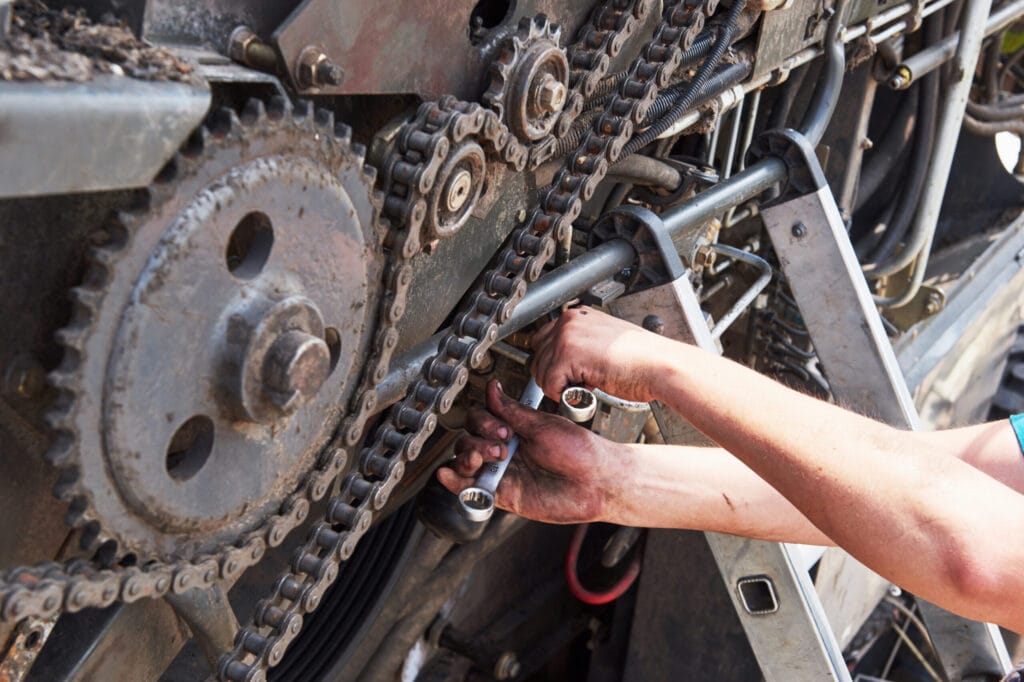
To extend chain life:
- Use correct lubrication — especially in high-speed systems
- Check for sprocket alignment regularly
- Keep chains clean to prevent abrasive wear
- Replace worn sections early to avoid system downtime
Following these steps ensures that your roller chain performs efficiently for years.
Conclusion
A well-documented roller chain size chart is the foundation of reliable power transmission design. From the smallest simplex chain to massive 12-strand duodenary configurations, each type serves a vital purpose in machinery worldwide.
At Ohio Roller Chain, we supply high-performance chains that meet or exceed international quality standards. Use our roller chain dimensions chart to find your perfect fit — and contact us for expert advice, custom manufacturing, or bulk orders.
Ohio Roller Chain – powering the world, one link at a time.