

Guide to High-Quality Chain Couplings & Couplers

A chain coupling is one of the most dependable and efficient components used in industrial machinery to connect two rotating shafts while ensuring stable and powerful torque transfer. Because it allows for slight misalignment and performs well under heavy loads, the chain coupling has become a trusted choice across many industries. Chain couplers and chain couplings deliver long service life, straightforward maintenance, and impressive strength in demanding operating conditions. At Ohio Roller Chain, we provide premium chain couplings designed for superior performance, reliable alignment support, and long term mechanical stability. Choosing the right chain coupling improves equipment efficiency, reduces downtime, and increases operational reliability for businesses of every size.
Introduction to Chain Coupling
In industrial settings where consistent power transmission is essential, the chain coupling is a vital component that ensures smooth mechanical performance. Its simple design, durable construction, and ability to manage misalignment make it one of the most practical coupling solutions available. A chain coupling uses a pair of sprockets connected by a roller chain, creating a strong and flexible link between two shafts.
Unlike rigid couplers that require perfect shaft alignment, a chain coupling can absorb small alignment errors while still delivering efficient torque transfer. This adaptability is one of the main reasons chain couplings continue to be widely used in manufacturing, processing plants, material handling operations, and heavy machinery systems.
How a Chain Coupling Works
Although a chain coupling appears simple, its function is highly effective. Each shaft is fitted with a sprocket. A roller chain is then wrapped around the sprockets to synchronize their motion. When the driving shaft rotates, its sprocket pulls the roller chain, which then rotates the driven sprocket on the second shaft. This smooth power transfer allows both shafts to work together even when the alignment is not perfect.
The roller chain provides a slight degree of flexibility, allowing the coupling to accommodate angular, axial, and parallel misalignments. This flexibility reduces mechanical stress and helps prevent premature equipment wear. As a result, chain couplers operate reliably even in environments with vibration, shock loads, or fluctuating torque levels.
Key Advantages of Using a Chain Coupling
A high quality chain coupling provides numerous benefits, making it one of the most effective power transmission components for industrial applications. Some of the most important advantages include:
Excellent Torque Transmission
Chain couplings handle high torque loads with ease. Their metal construction and roller chain design provide superior strength and stability.
Simple Installation and Maintenance
A chain coupling is easy to assemble, accessible for inspection, and convenient to lubricate. The roller chain can be quickly replaced without removing entire machinery sections.
Cost Efficient Operation
Chain couplers are generally more affordable than many other types of couplings. Replacement parts are economical and readily available, reducing maintenance expenses.
Strong Misalignment Tolerance
Slight shaft misalignments do not significantly impact performance. This trait reduces overall machine stress and increases the service life of bearings and shafts.
High Durability in Harsh Environments
Chain couplings made from heavy duty steel materials deliver long lasting performance in dusty, humid, abrasive, or high temperature conditions.
Resistance to Shock Loads
Industries that experience sudden or irregular forces benefit from the shock absorbing qualities of chain couplers. They continue to perform even during abrupt changes in load or speed.
Chain Coupling and Chain Coupler Meaning

The terms chain coupling and chain coupler refer to the same mechanical device. Both names describe a system that connects two shafts through matching sprockets and a roller chain. The word chain couplings is simply the plural form. Although different manufacturers may prefer one term over the other, the function and structure remain identical.
Common Types of Chain Couplings
Although all chain couplings follow the same basic principle, different designs exist to support specific working conditions.
Standard Roller Chain Coupling
This design uses a single strand chain to connect two sprockets. It is suitable for general purpose industrial applications.
Double Strand Chain Coupling
This version uses a wider double strand chain to handle higher torque loads and provide greater strength. It is ideal for heavy duty machinery.
Spacer Type Chain Coupling
The sprockets are separated with a spacer, allowing the machinery to have additional clearance. This type works well with pumps and equipment that need room for seal maintenance.
Continuous Chain Coupling
A continuous chain is wrapped around both sprockets and secured with a master link. This design provides enhanced stability and safety.
Each type of chain coupling offers unique benefits, making it easier to match the design to the requirements of each machine.
Industrial Applications of Chain Couplings
Chain couplings are widely used across industries because of their ability to withstand rigorous operating conditions. Common applications include:
• Conveyor systems
• Mixers and agitators
• Industrial pumps
• Compressors
• Crushers and mills
• Material handling equipment
• Blowers and fans
• Waste management machinery
• Packing and processing lines
The combination of durability, flexibility, and strength makes chain couplers the preferred option for both light and heavy industrial environments.
Why Chain Couplings Are Ideal for Heavy Duty Machinery
Heavy machinery requires components that can withstand extreme working conditions. Chain couplings outperform many other coupling types in this area for several reasons.
First, they are built from high quality metal components that endure continuous force and motion. Second, their design allows them to absorb sudden loads without damage. Third, they maintain performance even when conditions are dusty, gritty, or exposed to oil and moisture. These qualities make chain couplers reliable choices for mining operations, steel plants, construction machinery, and manufacturing lines.
Maintenance Tips for Long Lasting Chain Couplings
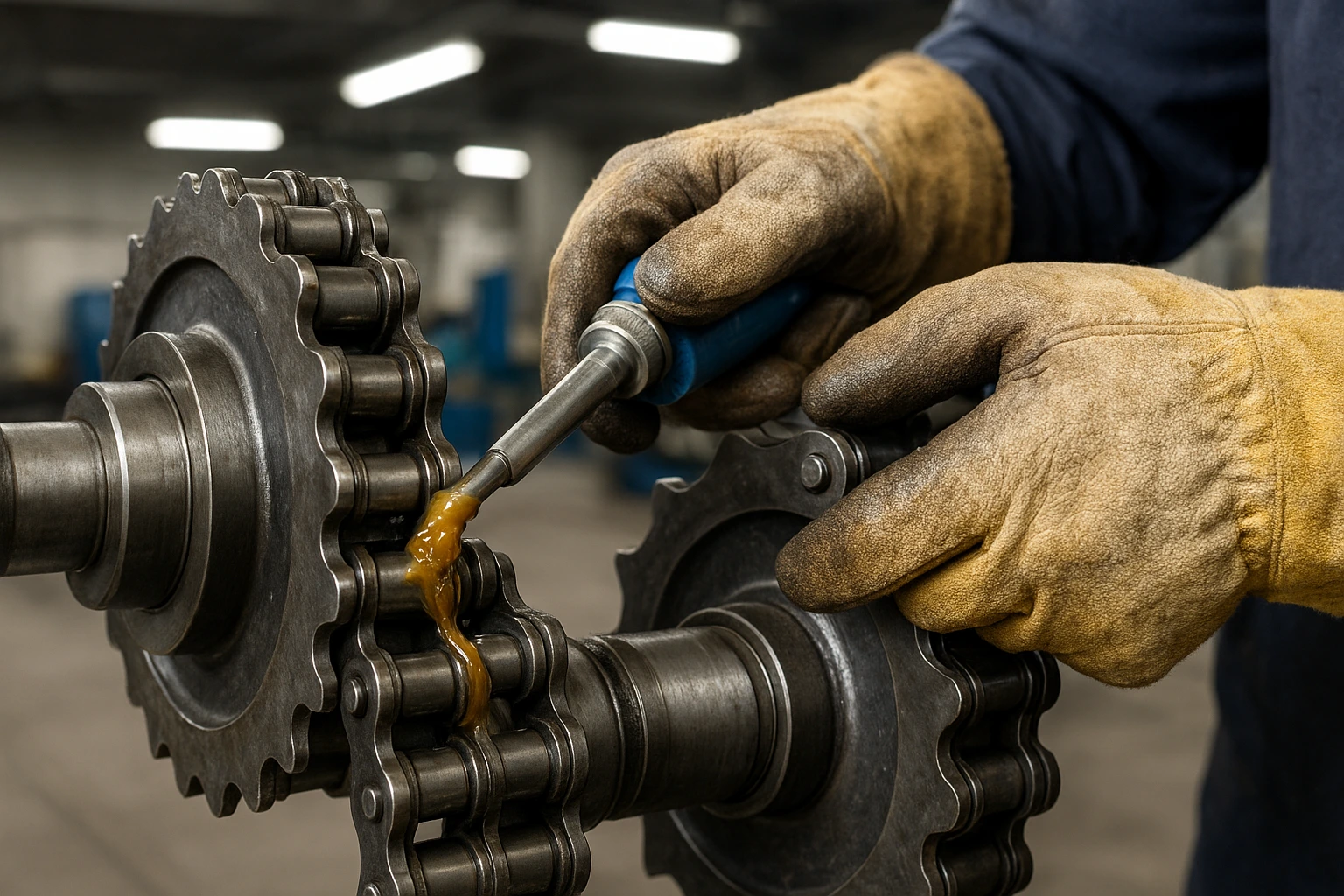
Although chain couplings are durable and low maintenance, proper care extends their lifespan significantly.
Lubrication
Regular lubrication reduces friction and prevents chain wear. Applying suitable grease at recommended intervals helps maintain smooth operation.
Chain Inspection
Roller chains may stretch over time. Inspect the chain regularly and replace it when wear becomes noticeable.
Alignment Check
Although chain couplers allow for misalignment, extreme misalignment can reduce performance. Checking shaft alignment during scheduled maintenance prevents issues.
Fastener Tightening
Ensure that sprockets, covers, and keys are securely tightened to avoid slippage or damage.
Protective Covers
Using protective covers prevents contamination from dirt, moisture, and debris. Always keep the cover in place during operation.
How to Choose the Right Chain Coupling
Selecting the correct chain coupling improves efficiency, reliability, and safety. Important factors to consider include:
Torque Requirements
Determine the torque levels involved and choose a coupling with adequate capacity to handle peak loads.
Shaft Size and Keyway Dimensions
Choose a chain coupling that fits the exact shaft measurements for proper installation and secure engagement.
Operating Environment
For environments exposed to moisture, chemicals, or dust, select corrosion resistant materials and protective covers.
Speed and Load Characteristics
High speed equipment may require a balanced design, while shock load applications may need a double strand chain.
Misalignment Levels
Different couplings offer different misalignment tolerances. Choose one that matches the alignment conditions of your machinery.
Conclusion
The chain coupling remains one of the most trusted and efficient mechanical components for industrial power transmission. Whether referred to as a chain coupler or chain coupling, its ability to deliver strong torque transfer, tolerate misalignment, and operate in challenging environments makes it essential for modern machinery. With proper maintenance and the right selection, chain couplings ensure long term performance, reduced downtime, and greater mechanical stability. Companies that rely on durable and dependable equipment choose chain couplings to maintain consistent productivity and reliable operation across their entire system.